
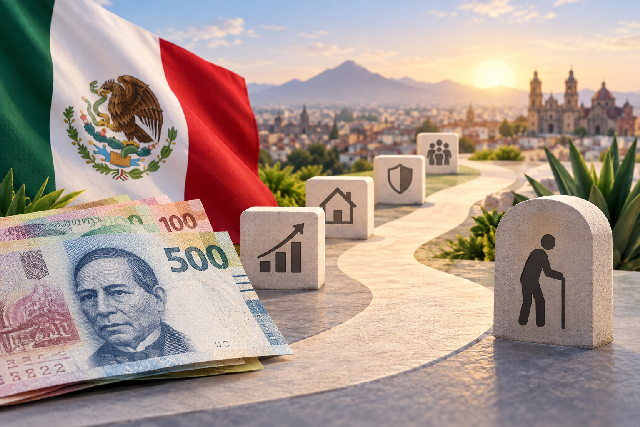
The Mexican peso has become one of the most closely watched currencies in 2026. After strengthening sharply against the U.S. dollar, the peso has returned to levels not seen in more than two years. That may sound like a story only for currency traders, but the exchange rate can affect ordinary people in surprisingly direct ways.
A stronger peso changes how much Americans pay while visiting Mexico, how many pesos families receive from dollar remittances, how Mexican companies earn money from U.S. customers, and how investors perform when they own Mexican assets.
For most readers, the important question is not whether the peso will rise or fall tomorrow. It is how the current exchange rate changes financial decisions you may already be making.
What Changed With the Mexican Peso?
The peso has strengthened considerably against the U.S. dollar. Banco de México data show that the exchange rate averaged about 17.07 pesos per dollar in August 2026. By September 4, wholesale market data were around 16.88 pesos per dollar. :contentReference[oaicite:0]{index=0}
Reuters reported in late August that the peso had gained nearly 20% since the beginning of 2025 and had moved below 17 pesos per dollar. The currency’s surprising strength has revived the nickname “super peso.” :contentReference[oaicite:1]{index=1}
Several forces are contributing to the move. A weaker U.S. dollar has helped. Mexico has also maintained relatively high interest rates, which can attract global investors looking for better yields. Reuters has also pointed to political stability, reduced trade fears and strength in higher-value manufacturing as supporting factors. :contentReference[oaicite:2]{index=2}
Interest rates remain an important part of the picture. Banco de México’s target rate stood at 6.50% in early September. The Federal Reserve’s target range was 3.50% to 3.75% after its July meeting. That gap can make peso-denominated investments attractive to some international investors, although currency risk can quickly erase the benefit of higher interest rates. :contentReference[oaicite:3]{index=3}
Why a Stronger Peso Matters to Your Money
The phrase “strong peso” sounds positive, but whether it helps you depends on which currency you earn and which currency you spend.
| Situation | Effect of a Stronger Peso |
|---|---|
| U.S. traveler visiting Mexico | Your dollars buy fewer pesos, so Mexico becomes more expensive. |
| Family sending dollars to Mexico | The recipient receives fewer pesos for the same dollar amount. |
| Mexican consumer buying imported goods | Imports priced in dollars may become cheaper, although retail prices do not always fall immediately. |
| Mexican exporter paid in dollars | Dollar revenue converts into fewer pesos, potentially reducing profit margins. |
| U.S. investor holding Mexican assets | A stronger peso can add to returns when investments are converted back into dollars. |
Travelers to Mexico May Notice Higher Costs
If you earn U.S. dollars and travel to Mexico, a stronger peso reduces your purchasing power.
Consider a simple example. Suppose you plan to spend $2,000 during a vacation.
At 20 pesos per dollar:
$2,000 × 20 = 40,000 pesos
At 16.9 pesos per dollar:
$2,000 × 16.9 = 33,800 pesos
That is a difference of 6,200 pesos in purchasing power even though your dollar budget did not change.
This does not mean every hotel or restaurant suddenly costs more. Some tourism businesses price directly in dollars, and local prices can change independently. But travelers paying for meals, transportation, shopping and attractions in pesos will generally feel the effect.
A practical approach is to build some exchange-rate flexibility into your travel budget. If a Mexico trip would be comfortable only if the dollar returns to a much stronger level, the budget may be too tight.
Sending Money to Mexico Can Be More Expensive
Families sending remittances from the United States face the opposite side of the same calculation.
Imagine someone sends $500 each month.
At 20 pesos per dollar, $500 converts to about 10,000 pesos before transfer fees. At 16.9 pesos per dollar, the same $500 converts to roughly 8,450 pesos.
The sender has not reduced the payment, but the recipient’s peso income has fallen by roughly 1,550 pesos.
This matters for households using remittances to cover groceries, housing, utilities or other recurring expenses. It can be especially noticeable when the exchange rate changes faster than local expenses do.
Before increasing the amount sent, compare the actual exchange rate offered by several transfer services. The advertised transfer fee is only part of the cost. Some providers make additional money by offering customers a worse exchange rate than the market rate.
Could a Strong Peso Lower Prices in Mexico?
Potentially, but the effect is not automatic.
A stronger peso makes dollar-priced imports less expensive in peso terms. This can help companies buying machinery, electronics, fuel components, raw materials or other imported products.
Mexican consumers may eventually benefit if businesses pass those savings along. But exchange rates are only one part of a retail price. Labor, rent, transportation, taxes and profit margins matter too.
Consumers should therefore avoid assuming that a 5% rise in the peso will produce a 5% decline in store prices. Currency movements usually move through the economy gradually and unevenly.
The Strong Peso Can Hurt Mexican Exporters
A strong currency can create problems for businesses that earn dollars but pay many of their costs in pesos.
For example, suppose a Mexican company earns $1 million from U.S. customers. At 20 pesos per dollar, that revenue becomes 20 million pesos. At 17 pesos per dollar, it becomes only 17 million pesos.
If the company’s wages, utilities and other Mexican expenses remain similar, its profit margin can shrink.
Reuters reported that major exporters have already discussed pressure from the strong currency, even while Mexico’s overall export sector remains substantial. :contentReference[oaicite:4]{index=4}
This matters beyond shareholders. If currency pressure lasts long enough, businesses may reconsider hiring, investment, pricing or expansion plans.
What the Peso Means for Investors
Investors should separate two different sources of return: the investment itself and the currency.
Suppose a U.S. investor owns a Mexican stock that rises 8% in peso terms. If the peso also strengthens against the dollar, converting the investment back to dollars could increase the investor’s total return.
The reverse is also true. A profitable Mexican investment can produce a disappointing dollar return if the peso falls sharply.
This is why buying a Mexico-focused stock fund is not simply a bet on Mexican companies. Depending on the fund, it may also expose you to the peso.
Investors attracted by Mexico’s higher interest rates should be especially cautious about assuming that the rate difference is free money. Currency traders sometimes use a strategy known as the carry trade: borrowing or holding money in a lower-yielding currency and investing in a higher-yielding one. It works well when exchange rates cooperate. A sudden currency reversal can erase months of interest gains quickly.
Should You Exchange Dollars for Pesos Now?
For ordinary travelers, trying to predict the perfect exchange rate usually adds more stress than value.
If you have a trip coming soon, consider exchanging or withdrawing money gradually rather than making one large currency bet. You can also use a credit card with no foreign transaction fee when appropriate, provided the merchant charges you in pesos.
Be cautious when a store, hotel or ATM offers to convert your purchase into U.S. dollars. This service is often called dynamic currency conversion. The exchange rate offered may be less favorable than the rate your card network would have used.
If you are sending recurring remittances, compare both fees and exchange rates. If you are investing, base the decision on your portfolio goals rather than assuming the peso’s recent rise will continue indefinitely.
Three Questions to Ask Before Making a Money Decision
- Which currency do I earn? Someone earning dollars experiences a stronger peso differently from someone earning pesos.
- Which currency do I spend? A stronger peso can hurt dollar-based travelers while helping Mexican buyers of some imported goods.
- Am I depending on the exchange rate moving in my favor? If a trip, remittance budget or investment works only under one exchange-rate forecast, consider adding a larger safety margin.
What Could Move the Peso Next?
Interest rates remain one of the biggest variables. Investors are watching both Banco de México and the Federal Reserve. Fed Governor Christopher Waller said on September 3 that he could support keeping U.S. rates unchanged if recent signs of easing inflation continue, while leaving open the possibility of a rate increase if incoming data worsen. The next Federal Reserve meeting is scheduled for September 15–16. :contentReference[oaicite:5]{index=5}
Trade policy is another major risk. Mexico’s economy is closely connected to the United States, and uncertainty surrounding future U.S.-Mexico trade arrangements can quickly change investor sentiment.
That means today’s strong peso is not guaranteed to remain strong. Currency markets can reverse rapidly when interest-rate expectations, trade policy or global risk conditions change.
Frequently Asked Questions
Is the Mexican peso strong right now?
Yes. In early September 2026, the peso was trading near 16.9 per U.S. dollar in wholesale markets, substantially stronger than levels seen during much of the previous several years. :contentReference[oaicite:6]{index=6}
Is a strong peso good for Americans traveling to Mexico?
Generally, no. A stronger peso means one U.S. dollar buys fewer pesos, reducing the purchasing power of American travelers.
Is a strong peso good for Mexico?
It creates winners and losers. Imported goods can become cheaper, and a strong currency can reflect investor confidence. But exporters and families receiving dollar remittances can be hurt because each dollar converts into fewer pesos.
Should I wait for the peso to weaken before visiting Mexico?
That depends on your budget and travel flexibility. Exchange rates are difficult to forecast consistently. Instead of postponing a trip solely because of currency movements, calculate your costs using today’s rate and decide whether the trip still fits your budget.
Bottom Line
The peso mexicano’s 2026 strength matters well beyond currency markets. Americans traveling to Mexico may get fewer pesos for their dollars. Families receiving remittances may see less local purchasing power. Mexican importers can benefit, while exporters may face tighter margins. Investors can gain or lose from the currency itself in addition to the performance of their investments.
The safest personal-finance approach is not to guess where the peso goes next. Use the current exchange rate when planning, leave room for normal currency fluctuations, compare conversion costs carefully, and avoid financial decisions that depend on one specific currency forecast being correct.
References
- Banco de México — Exchange Rate Data — Official daily market data used to verify recent peso-to-dollar exchange rates.
- Banco de México — Monthly Exchange Rate — Official monthly averages showing the peso’s recent strength against the U.S. dollar.
- Banco de México — Interest Rates — Supports the current Banco de México policy-rate information and Mexican market interest rates.
- Reuters — The Super Peso Is Back and It’s Starting to Hurt — Provides reporting on the peso’s rally, its drivers and the pressure a strong currency can create for Mexican exporters.
- Federal Reserve — July 2026 FOMC Minutes — Supports the current U.S. federal funds target range and the September meeting schedule.
- Federal Reserve — Governor Christopher Waller, September 3, 2026 — Provides recent Federal Reserve commentary on inflation and possible interest-rate decisions.