
High-yield savings accounts are worth another look in 2026. As of early October, several U.S. banks are offering savings yields near 4%, while certain promotional or conditional offers reach roughly 4.5%. That is far above the rate many traditional savings accounts pay.
A higher annual percentage yield, or APY, can make a meaningful difference when you are keeping an emergency fund, saving for a home repair, building a vacation fund, or holding cash for another short-term goal. Unlike stocks, savings accounts do not expose your balance to market losses, and qualifying deposits at an FDIC-insured bank are generally insured up to applicable federal limits.
Still, the account advertising the highest APY is not automatically the best choice. We ranked these accounts using a combination of current yield, monthly fees, minimum-deposit rules, conditions for earning the advertised rate, access to funds, digital usability, and simplicity. Rates are variable, so verify the current APY before moving money.
Quick Comparison of High-Yield Savings Accounts
| Rank | Account | Advertised APY | Opening Minimum | Monthly Fee | Important Condition |
|---|---|---|---|---|---|
| 1 | EverBank Performance Savings | 4.20% for new accounts | $0 | $0 | Rate shown for new accounts |
| 2 | Openbank High Yield Savings | Up to 4.15% | $500 | No routine monthly maintenance fee highlighted | Top rate includes promotional boost and can vary by ZIP code |
| 3 | Bread Savings High-Yield Savings | 4.00% | $100 | $0 | Online-focused account |
| 4 | Forbright Bank Growth Savings | 3.85% | $0 | $0 | No special balance requirement for advertised APY |
| 5 | SoFi Savings | Up to 4.50% | $0 | Account has no minimum balance; highest rate requires SoFi Plus | 4.50% applies only to qualifying balances up to $20,000 |
Rate note: The figures above reflect information available in early October 2026. Savings APYs are variable and can change at any time.
#1 EverBank Performance Savings

EverBank Performance Savings takes the top spot because it combines a strong yield with unusually simple requirements. EverBank was advertising a 4.20% APY for new Performance Savings accounts as of October 2, 2026. The account has no monthly maintenance fee, no minimum balance requirement, and a $0 minimum opening deposit.
That combination matters. Some competitors can beat 4.20% only if you subscribe to another service, maintain direct deposits, or keep your balance within a certain tier. EverBank’s offer is easier to understand for someone who simply wants to move an emergency fund into a better-paying account.
The account can be managed online or through EverBank’s mobile banking tools. Interest is compounded daily, and deposits are FDIC-insured within applicable limits. The savings account itself is designed for liquid savings rather than everyday spending, so you may still want to keep a checking account elsewhere for bills and debit-card purchases.
Best for: Savers who want a competitive APY without monthly fees, subscription charges, or a minimum-balance hurdle.
#2 Openbank High Yield Savings
Openbank, the digital banking division of Santander Bank, ranks second because its High Yield Savings account was advertising up to 4.15% APY in late September and early October 2026. That rate includes a promotional APY boost for eligible new customers.
The biggest difference from EverBank is the fine print. Openbank requires at least $500 to open the account. The available APY can also depend on the residential ZIP code entered during the application. The boosted rate is promotional, so it should not be treated as a permanent guarantee.
Openbank is entirely digital. That can be convenient if you are comfortable using an app and electronic transfers, but Openbank accounts generally are not serviced inside Santander branches.
There is another insurance detail Santander customers should notice. Openbank deposits and Santander Bank deposits are held under the same FDIC certificate. That means you cannot assume you receive a separate $250,000 insurance limit simply by dividing money between Santander and Openbank under the same ownership category.
Best for: Savers with at least $500 who are comfortable banking digitally and want to take advantage of a competitive promotional yield.
#3 Bread Savings High-Yield Savings

Bread Savings earns third place for simplicity. Its high-yield savings account was paying 4.00% APY as of October 2, 2026, according to current rate data. You need $100 to open the account, but there is no monthly maintenance fee and only $1 is needed to earn the advertised APY.
This is a straightforward choice for someone who does not want to manage direct-deposit requirements or subscription plans. Bread Savings is online-focused, so it works especially well when the account is being used as a separate place for an emergency fund or another savings goal.
There are some trade-offs. Bread Savings does not provide the type of ATM access that a checking-oriented bank may offer, and optional services can carry fees. For example, paper statements may cost extra. Those drawbacks matter less if your normal routine is simply transferring money electronically between savings and checking.
Best for: People who want a competitive, uncomplicated APY and expect to manage most transfers electronically.
#4 Forbright Bank Growth Savings
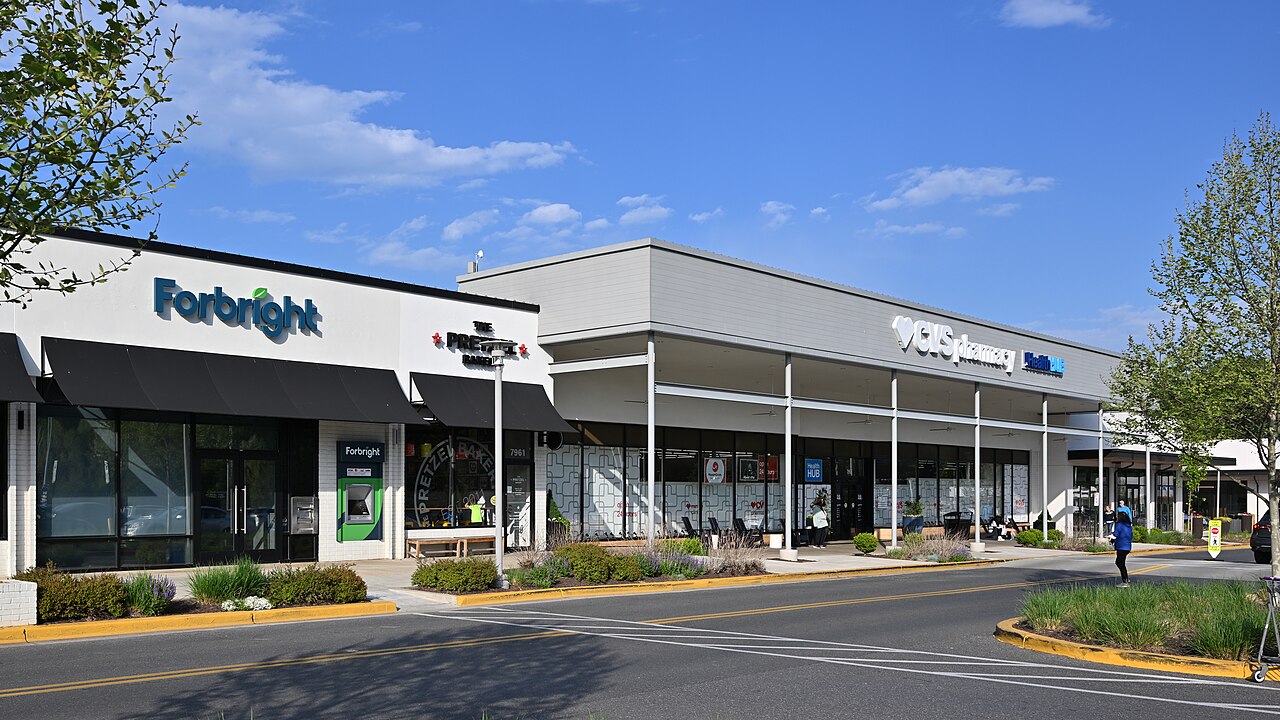
Forbright Bank Growth Savings was offering 3.85% APY in early October 2026. Although that rate is slightly lower than those of the first three accounts, its lack of fees and balance requirements makes it competitive.
There is no required minimum deposit and no monthly account fee. Customers can use online banking, a mobile app, and mobile check deposit. Deposits are FDIC-insured up to applicable limits.
Forbright also received recognition from U.S. News & World Report in 2026 for its savings offering. Awards should never replace your own rate and fee comparison, but Forbright’s straightforward structure is the main reason it makes this list.
For an emergency fund, predictability can sometimes be more valuable than chasing another 0.10 percentage point of interest. If another bank requires complicated monthly activity to earn a slightly higher yield, Forbright may be easier to maintain.
Best for: Savers who value no minimum deposit, no monthly fee, and simple digital banking more than squeezing out the absolute highest available APY.
#5 SoFi Savings
SoFi is the unusual entry on this list. Its headline rate is actually the highest of the five: SoFi Plus members can earn 4.50% APY on qualifying savings balances up to $20,000. However, the conditions keep it from ranking first.
SoFi Plus costs $10 per month. The portion of qualifying savings above $20,000 earns a lower rate. Customers with eligible direct deposit or qualifying deposits can earn a competitive savings rate without Plus, but not necessarily the full 4.50% APY.
This is where comparing APYs without comparing costs can be misleading. Suppose you have $20,000. A 4.50% APY would generate roughly $900 over one year if the rate and balance stayed unchanged. At 4.20%, the same $20,000 would generate roughly $840. The difference is about $60.
A $10 monthly SoFi Plus subscription costs $120 a year. If you purchased Plus solely to earn an extra 0.30 percentage point on $20,000, the extra interest would not offset the subscription cost. The calculation changes if you already use and value other SoFi Plus benefits.
Best for: Existing SoFi users who already benefit from SoFi Plus or who qualify for other attractive SoFi savings promotions.
How Much Can a Higher APY Really Save You?
For a simple comparison, multiply your savings balance by the APY to estimate roughly how much interest you might earn over one year when the balance and rate remain unchanged.
Approximate annual interest = Savings balance × APY
| Balance | At 0.40% APY | At 4.00% APY | Difference |
|---|---|---|---|
| $5,000 | About $20 | About $200 | About $180 |
| $10,000 | About $40 | About $400 | About $360 |
| $25,000 | About $100 | About $1,000 | About $900 |
Actual results depend on compounding, deposits, withdrawals, taxes, and rate changes, but the example shows why moving idle cash from a very low-yield account can matter.
What to Check Before Opening an Account
Start with APY, but do not stop there. Check whether the advertised yield is permanent or promotional and whether it applies to your entire balance. Look for monthly fees, subscription charges, direct-deposit requirements, minimum opening deposits, and minimum balances.
Access is also important for emergency savings. Find out how quickly ACH transfers normally reach your checking account and whether the bank offers another withdrawal method. A slightly lower APY may be worthwhile if access is simpler when an unexpected bill arrives.
Finally, confirm FDIC coverage. The standard insurance amount is generally $250,000 per depositor, per insured bank, for each account ownership category. Accounts operating as divisions or brands of the same bank may share the same insurance limit.
Frequently Asked Questions
Is a high-yield savings account safe?
A high-yield savings account at an FDIC-insured bank generally receives the same federal deposit insurance protection as a traditional savings account, subject to coverage limits and ownership rules.
Can a bank change my APY after I open the account?
Yes. High-yield savings accounts normally have variable rates. The bank can increase or decrease the APY as market conditions change.
Is savings-account interest taxable?
Generally, yes. Interest earned in a taxable savings account is normally considered taxable interest income. Your bank may send you Form 1099-INT when applicable.
Should my emergency fund be in a high-yield savings account?
For many households, it can be a practical choice because the money can earn interest while remaining relatively liquid. The account should still provide fast enough access for your expected emergencies.
Which High-Yield Savings Account Is Best in 2026?
EverBank Performance Savings currently offers the strongest overall combination on this list: a high new-account APY with no monthly maintenance fee and no minimum balance requirement. Openbank is worth comparing if you qualify for its boosted rate, while Bread Savings and Forbright provide attractive options for people who prefer simpler account rules.
SoFi can deliver the highest headline APY among these five, but the balance cap and SoFi Plus requirement demonstrate why the biggest advertised number is not always the best deal.
Before switching, compare the dollar difference rather than APY alone. Moving $20,000 to earn another 0.10 percentage point is worth only about $20 annually before taxes if rates stay unchanged. Avoid paying significant fees or making your emergency money difficult to access just to capture a tiny yield advantage.
For most savers, the best high-yield savings account is the one that combines a competitive rate with no unnecessary fees, appropriate FDIC coverage, easy transfers, and account rules you can comfortably maintain.
References
- EverBank Performance Savings — Official account information supporting APY, opening-deposit, fee, FDIC insurance, compounding, and online-access details.
- Openbank High Yield Savings — Official Openbank information supporting its promotional APY structure, $500 opening requirement, geographic rate variation, and Santander FDIC relationship.
- Forbright Bank — Official bank information supporting Growth Savings rates, digital banking features, minimum-deposit terms, and FDIC insurance.
- SoFi Terms of Use — Official terms supporting SoFi Plus pricing, the 4.50% APY tier, the $20,000 balance threshold, and lower APY applicable to other savings balances.
- Federal Deposit Insurance Corporation — Official guidance explaining FDIC deposit insurance limits and account ownership categories.