
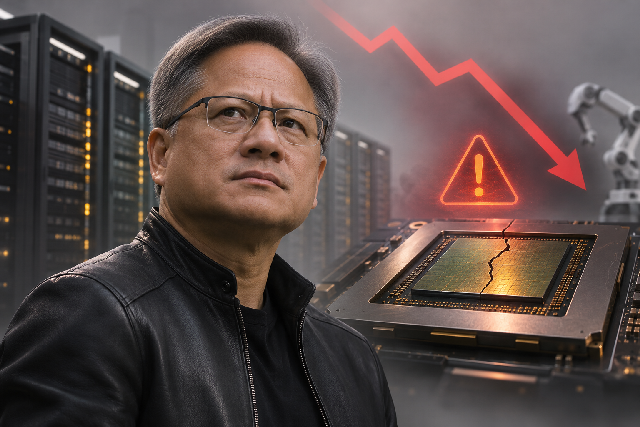
Nvidia investors are used to worrying about AI demand, chip competition, export restrictions and sky-high expectations. Now they have another risk to evaluate: the controversy surrounding CEO Jensen Huang.
On November 8, 2026, Huang acknowledged in an email published by Nvidia that he had been unfaithful to his wife. At the same time, Nvidia’s board announced an independent investigation following reports that Huang had been targeted by a foreign intelligence effort. Importantly, the board said on November 8 that it had no reason at that point to believe U.S. national-security interests or Nvidia secrets had been compromised.
Those distinctions matter. Huang has admitted infidelity. Allegations involving foreign intelligence, company information and possible national-security implications are separate issues that remain subject to investigation. Investors should not treat allegations as established facts.
For Nvidia shareholders, the central question is therefore not whether Huang’s personal conduct is embarrassing. It is whether the controversy develops into something that changes Nvidia’s earnings power, government relationships, leadership stability or legal exposure.
Nvidia Stock’s Immediate Reaction Was Significant
Nvidia shares closed down about 4.3% on November 9, wiping roughly $190 billion from the company’s market value, according to Reuters.
A proposed shareholder class action was also filed against Nvidia and Huang. The complaint alleges that investors were misled because relevant information was not adequately disclosed. Those are allegations, not findings of liability.
Timing is important. Reuters reported that the lawsuit was filed about five minutes after the U.S. stock market closed. It would therefore be misleading to say the lawsuit caused Nvidia’s 4.3% regular-session decline that day. The stock was already reacting to the broader controversy and uncertainty surrounding the investigation.
On November 10, Nvidia said its independent directors had retained former acting U.S. Attorney Joon H. Kim and the law firm Wachtell, Lipton, Rosen & Katz to conduct the investigation.
Why the Scandal Could Matter Financially
Investors can separate the risk into four areas. Some are much more important to Nvidia’s valuation than Huang’s personal conduct itself.
| Risk | Why Investors Care | What Could Make It More Serious |
|---|---|---|
| Key-person and succession risk | Huang is closely associated with Nvidia’s strategy, customers and AI leadership. | Unexpected leadership change, unclear succession planning or loss of key employees. |
| Legal and governance risk | Litigation and investigations can create costs and questions about disclosure or board oversight. | Regulatory action, evidence of misleading disclosures or significant financial liabilities. |
| National-security and China risk | Nvidia already operates under strict U.S. semiconductor export controls. | Evidence involving company information, export-control violations or tighter government restrictions. |
| Valuation risk | Nvidia’s price reflects extremely strong expectations for future AI growth. | Any event that reduces expected growth, margins or investor confidence can produce a disproportionate stock move. |
1. Jensen Huang Creates a Real Key-Person Risk
Huang is not an ordinary corporate CEO. He co-founded Nvidia and has led it through its transformation from a graphics-chip company into the dominant supplier of computing hardware for the generative-AI boom.
That creates key-person risk. If Huang were unexpectedly unable to lead the company, investors would immediately ask who could replace him, whether customers would react and whether Nvidia could maintain the same product and strategic execution.
This does not mean Nvidia cannot succeed without Huang. It means investors should recognize that part of the market’s confidence in Nvidia is connected to an unusually influential founder-CEO.
Someone whose Nvidia thesis depends heavily on Huang personally has more exposure to this controversy than an investor whose thesis is based mainly on Nvidia’s technology ecosystem, earnings, cash generation and competitive position.
2. The Lawsuit Matters, but the Investigation Matters More
The proposed shareholder class action adds another source of uncertainty. However, lawsuits following major stock declines are not unusual, and filing a complaint does not prove wrongdoing.
The more important issue is what Nvidia’s independent investigation uncovers. Reuters has reported that the controversy could raise questions involving corporate disclosure, board oversight and possible regulatory scrutiny if new evidence emerges.
For shareholders, the severity changes dramatically depending on the outcome. A personal misconduct story that produces no material corporate consequences is one situation. Evidence of undisclosed risks involving company information, national security or securities disclosures would be a very different investment problem.
3. China Risk Was Already Costing Nvidia Billions
The national-security angle deserves special attention because Nvidia already faces financially significant restrictions involving China.
According to Nvidia’s SEC filing for the second quarter of fiscal 2027, U.S. export licensing requirements contributed to a $4.5 billion charge related to H20 inventory and purchase obligations in the first quarter of fiscal 2026.
Nvidia also reported a further $0.4 billion charge during the first half of fiscal 2027 associated with H200 inventory and purchase obligations. The company said that, under the existing rules and geopolitical environment, it had effectively been unable to compete broadly in China’s data-center computing market.
That makes the current controversy potentially more consequential than a typical CEO scandal. China restrictions are already an earnings issue, not simply a reputational issue.
Reuters reported on November 10 that U.S. lawmakers were discussing tighter rules governing China’s access to advanced chips following the allegations. Whether those proposals become law is uncertain, but investors should watch Washington carefully.
4. Nvidia’s Valuation Makes Bad News More Dangerous
A stock priced for modest growth can sometimes absorb disappointing news without a dramatic change in valuation. A company expected to dominate one of the largest technology investment cycles in history has less room for disappointment.
Nvidia investors are effectively paying for years of powerful AI demand, high margins and continued competitive leadership. That means even an issue that does not immediately reduce revenue can hurt the stock if investors demand a larger risk discount.
This is why the most important question is not, “Is the scandal bad?” It is, “Does it alter the assumptions supporting Nvidia’s future cash flows?”

Which Other AI Stocks Could Be Affected?
A prolonged Nvidia problem would not affect every AI stock in the same way. Investors should compare companies using consistent criteria rather than assuming the entire sector will move together.
| Company or Group | Nvidia Dependency | Competitive Opportunity | AI-Capex Sensitivity | Export-Control Exposure |
|---|---|---|---|---|
| AMD | Low direct dependency | High potential if customers seek alternatives | High | High |
| Broadcom | Moderate ecosystem overlap | Potential beneficiary in custom AI chips/networking | High | Moderate |
| Micron | Benefits from AI accelerator memory demand | Limited direct substitution | High | Meaningful geopolitical exposure |
| Semiconductor equipment makers | Indirect | Limited direct substitution | High | Often high |
| Large cloud providers | Major buyers of AI infrastructure | Some can develop custom chips | High spending exposure | Lower direct chip-export exposure |
| High-valuation AI infrastructure stocks | Varies | Varies | Very high | Varies |
AMD could theoretically benefit if customers become more interested in reducing dependence on Nvidia. But that does not mean AMD automatically rises when Nvidia falls. If investors interpret the controversy as a reason to reduce exposure to AI infrastructure broadly, AMD and other semiconductor stocks could decline at the same time.
Broadcom, Micron, chip-equipment companies and cloud providers face a similar two-sided effect. Some could capture business that would otherwise go to Nvidia, yet all remain exposed to the health of the larger AI capital-spending cycle.
Hypothetical Portfolio Example: How Concentration Changes the Risk
Consider a purely hypothetical $100,000 portfolio with a 10% Nvidia allocation.
Inputs: $100,000 portfolio × 10% Nvidia weight = $10,000 invested in Nvidia.
If Nvidia fell 20% while every other investment remained unchanged:
$10,000 × 20% = $2,000 loss.
The overall portfolio would decline approximately 2%:
$2,000 ÷ $100,000 = 2%.
Now imagine a diversified semiconductor or technology ETF in which Nvidia represents only 5% of the investor’s total portfolio exposure. The same 20% Nvidia decline would contribute roughly a 1% direct portfolio loss, assuming everything else stayed unchanged.
That assumption is the major limitation. During a real semiconductor selloff, correlations can rise sharply. AMD, Broadcom, Micron and other AI-linked stocks might decline alongside Nvidia. Diversification reduces company-specific concentration risk, but it does not eliminate sector risk.
Should Nvidia Investors Hold, Add, Trim or Sell?
There is no single correct response. A better approach is to ask whether the controversy changes the reason you own the stock.
- Hold or consider adding: This may fit investors whose thesis rests mainly on Nvidia’s earnings, technology moat, customer ecosystem and cash generation, and who can tolerate substantial governance and headline volatility.
- Consider trimming: This may make sense if Nvidia has grown into an outsized percentage of your portfolio, or if your confidence in the investment depends unusually heavily on Huang remaining CEO.
- Do not panic-sell solely because of headlines: A falling stock price is not itself proof that long-term business value has changed.
- Reassess aggressively if the facts change: Evidence that materially affects Nvidia’s government access, revenue outlook, leadership stability, intellectual property or legal liabilities would deserve a fresh valuation analysis.
Seven Catalysts Nvidia Investors Should Monitor
- Updates from Nvidia’s independent board investigation. The scope and conclusions matter far more than speculation.
- SEC or Justice Department involvement. Formal government action would raise the potential financial significance.
- Shareholder lawsuit developments. Watch whether claims survive early legal challenges and whether additional litigation follows.
- Evidence involving company information or export controls. This could transform a personal controversy into a material corporate problem.
- Succession disclosures. Any change in Huang’s role would make Nvidia’s leadership pipeline immediately important.
- New U.S.-China chip restrictions. Nvidia has already demonstrated that export rules can result in multibillion-dollar charges.
- Upcoming earnings and guidance. Revenue growth, margins, customer demand and management commentary remain the clearest tests of the underlying investment thesis.
What Would Actually Change the Nvidia Investment Thesis?
Investors should think in scenarios, not predictions.
Lower-impact scenario: The investigation finds no compromise of company information or national-security interests, Huang remains in place, and Nvidia’s earnings trajectory remains intact. In that case, the controversy could ultimately become mostly a reputational event.
Moderate-impact scenario: Legal costs, governance changes, greater government scrutiny or uncertainty around leadership produce a lasting valuation discount even without major damage to Nvidia’s revenue.
High-impact scenario: Investigators uncover material corporate, national-security or export-control problems, or Nvidia experiences a disruptive leadership change. That could affect both earnings estimates and the valuation investors are willing to pay.
The difference among those scenarios is enormous. That is why reacting to every headline is less useful than monitoring evidence that connects directly to revenue, cash flow, regulation or leadership.
Frequently Asked Questions
Did Jensen Huang admit the foreign-intelligence allegations?
No. Huang publicly admitted being unfaithful to his wife. Nvidia separately said its board was investigating reports that he had been targeted by a foreign intelligence effort. The company stated on November 8 that it had no reason at that time to believe national-security interests or Nvidia secrets had been compromised.
Did the shareholder lawsuit cause Nvidia’s November 9 decline?
The timing does not support that conclusion. Nvidia closed down about 4.3% on November 9, while Reuters reported that the proposed class action was filed shortly after the regular market closed.
Could AMD benefit from Nvidia’s problems?
Potentially. Customers looking to diversify accelerator suppliers could create an opening for AMD. However, a broad reassessment of AI-sector risk could push both companies’ shares lower at the same time.
What is the biggest risk for Nvidia shareholders?
The biggest risk is not the personal scandal by itself. It is the possibility that the investigation develops into a material leadership, governance, national-security, export-control or earnings issue.
Bottom Line
Jensen Huang’s controversy adds a new layer of uncertainty to one of the market’s most important AI stocks. But investors should separate personal conduct, confirmed corporate facts, allegations and unresolved questions.
Nvidia’s investment case still rests primarily on something measurable: demand for its computing platforms, competitive strength, margins, cash generation and its ability to navigate government restrictions. The scandal becomes financially important to the extent that it changes those fundamentals.
For investors, the practical lesson is also about portfolio construction. A company can remain an excellent business while being too large a position in one portfolio. Instead of trying to predict the next headline, investors can review Nvidia’s weight in their holdings, test how a major decline would affect their finances and watch for evidence that changes the underlying earnings thesis.
References
- NVIDIA Board of Directors statement, November 8, 2026 — Nvidia’s official announcement of the independent investigation and its statement regarding national-security interests and company secrets.
- Jensen Huang: “A Message to Our Company,” November 8, 2026 — Huang’s employee message acknowledging infidelity and supporting the board investigation.
- NVIDIA Form 10-Q, fiscal 2027 second quarter — SEC filing covering China export restrictions and the H20 and H200-related charges.
- Reuters: Nvidia and Huang sued over disclosures, November 9, 2026 — Source for the proposed shareholder class action, Nvidia’s 4.3% decline and roughly $190 billion market-value reduction.
- Reuters: Nvidia launches probe following foreign-intelligence reports — Reporting on the controversy, Huang’s admission and Nvidia’s response.
- Reuters: U.S. lawmakers push China chip rules, November 10, 2026 — Reporting on possible congressional implications for semiconductor export policy.