
An emergency fund has two jobs: protect you from unexpected expenses and remain available when you actually need it. Earning interest matters, but accessibility matters even more. A savings option paying slightly more can become a poor emergency-fund choice if your money is difficult, slow, or expensive to access.
That tradeoff is especially important in late 2026. Competitive savings products and short-term Treasury securities are still offering yields near 4%, but inflation remains a concern. The U.S. Bureau of Labor Statistics reported that consumer prices were 3.7% higher in September 2026 than a year earlier. That means even a 4% nominal return provides only a modest purchasing-power gain before taxes.
The five options below are ranked using the same criteria: yield, liquidity, federal protection or government backing, withdrawal restrictions, minimum balances, fees, rate risk, and complexity. Rates cited are examples available in October 2026 and can change quickly.
| Rank | Option | Example Yield in October 2026 | Access | Main Protection |
|---|---|---|---|---|
| 1 | High-yield savings account | About 4.00% to 4.25% APY | Usually same day to 1–2 business days | FDIC or NCUA insurance when eligible |
| 2 | Money market deposit account | Up to about 4.00% APY | Often immediate or near-immediate | FDIC or NCUA insurance when eligible |
| 3 | Treasury bills | About 4.01% to 4.37% on recent short-term auctions | Best when held to maturity | Full faith and credit of the U.S. government |
| 4 | Money market mutual fund | Roughly 3.5% to 3.9% 7-day yield in examples reviewed | Usually highly liquid, but not a bank deposit | Underlying securities; not FDIC-insured |
| 5 | Short-term CD ladder | Competitive CDs around 4%+ | Limited until each CD matures | FDIC or NCUA insurance when eligible |
#1 High-Yield Savings Account
For most households, a high-yield savings account offers the strongest overall combination of accessibility, safety, simplicity, and interest. That makes it the best starting point for an emergency fund.
CNBC Select reported in October 2026 that competitive high-yield savings accounts were paying around 4%, with some offers reaching 4.25% APY under particular balance or promotional conditions. One example paying 4.00% required essentially no meaningful balance to earn interest, while other accounts offered higher rates only after meeting deposit or balance requirements.
The major advantage is liquidity. You can generally transfer money to checking quickly, although an external transfer may take one or two business days. Some accounts also provide ATM access or can be paired with checking for faster access.
Deposits at an FDIC-insured bank are generally insured up to $250,000 per depositor, per insured bank, per ownership category. Federally insured credit unions provide similar coverage through the NCUA.
The main weakness is rate risk. Savings APYs are variable. A 4.00% account today could pay less several months from now. Also check for minimum balances, promotional conditions, withdrawal rules, and maintenance fees rather than choosing an account only because its advertised APY is highest.
Best for: The portion of your emergency fund that must remain readily available.
#2 Money Market Deposit Account
A bank money market deposit account, often shortened to MMA or MMDA, is similar to a high-yield savings account but may provide additional access features such as checks or a debit card.
CNBC Select’s October 2026 comparison showed leading money market accounts offering up to about 4.00% APY. One example required a $1,000 opening deposit and charged a $10 monthly fee unless the balance remained at least $2,000. That illustrates why the headline rate alone does not determine whether an account is attractive.
For emergency savings, the ability to write a check or use an ATM card can be valuable. You may be able to pay an urgent repair bill directly without first waiting for an external bank transfer.
Importantly, a bank money market deposit account is not the same thing as a money market mutual fund. An MMDA at an FDIC-insured bank is a deposit account covered under FDIC insurance rules. A money market mutual fund is an investment and is not covered by FDIC deposit insurance.
Money market accounts rank slightly below high-yield savings because some impose higher minimums, monthly fees, or transaction rules. If you find one with no fee, a competitive APY, and convenient access, however, it can be every bit as useful as a high-yield savings account.
Best for: Savers who want competitive interest plus check-writing, ATM, or debit-card access.
#3 Treasury Bills
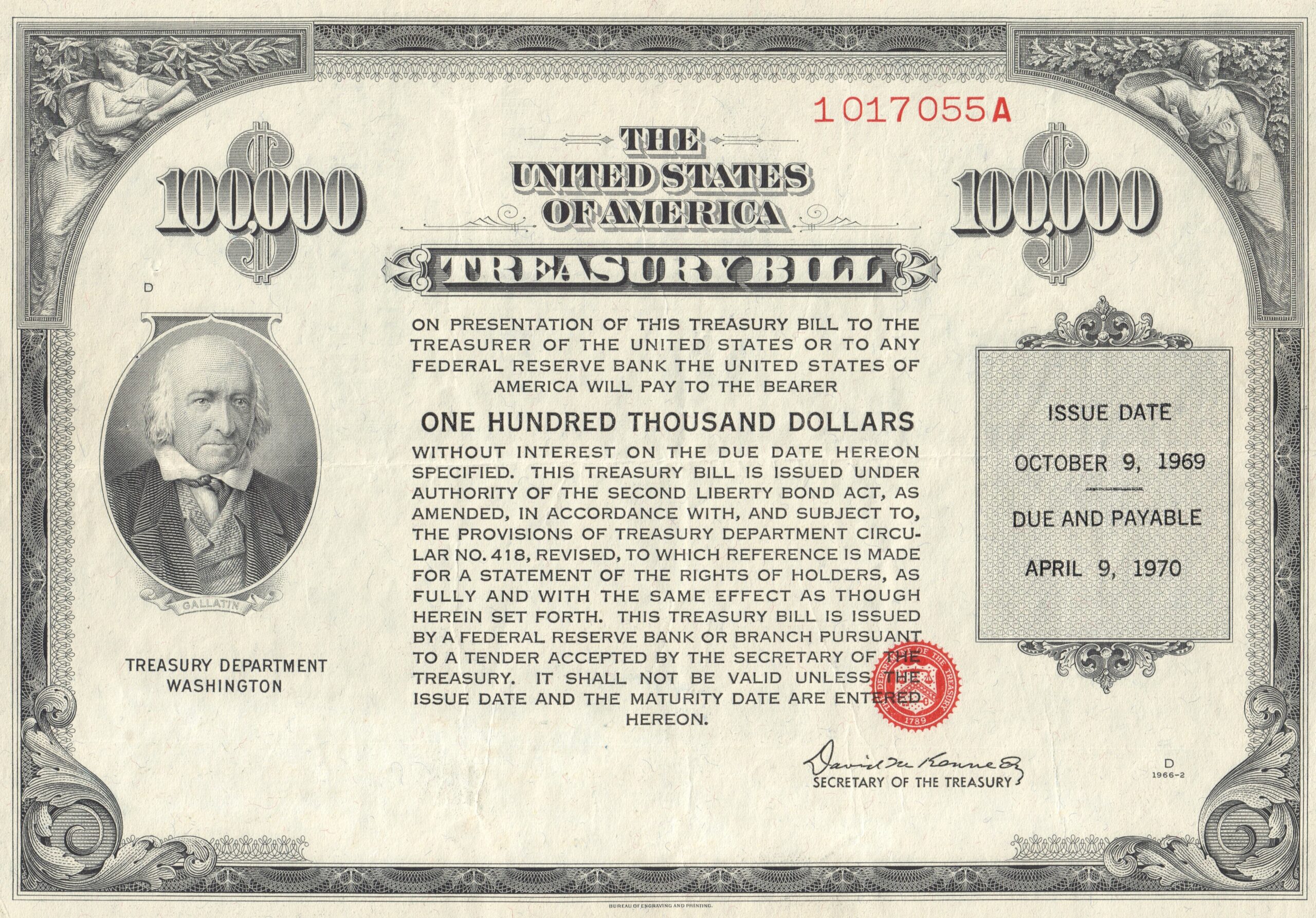
Short-term U.S. Treasury bills can be attractive for the secondary portion of an emergency fund, particularly when their yield exceeds nearby savings-account rates.
Recent October 2026 Treasury auctions illustrate the opportunity. The 4-week Treasury bill auction on October 22 produced an investment rate of about 4.012%. The 13-week bill auction on October 19 produced about 4.195%, while the 26-week bill produced about 4.372%.
Treasury bills are obligations of the U.S. government and are backed by its full faith and credit. They are not FDIC-insured because they are securities rather than bank deposits.
They also have a tax advantage for some savers. Treasury interest is subject to federal income tax but exempt from state and local income taxes. That can make a Treasury yield more attractive than an identical bank APY for residents of states with income taxes.
The tradeoff is access. A Treasury bill works best if you can leave it untouched until maturity. TreasuryDirect automatically sends the maturity value to your designated destination, but selling early is more complicated. Securities held in TreasuryDirect generally must be transferred to a bank, broker, or dealer for sale, and TreasuryDirect states that newly purchased marketable securities must normally remain there for 45 days before transfer.
For that reason, Treasury bills should generally supplement rather than replace immediately available emergency cash.
Best for: A second layer of emergency savings that is unlikely to be needed tomorrow.
#4 Money Market Mutual Fund
A money market mutual fund can provide convenient cash management inside a brokerage account. These funds invest in short-term, highly liquid securities and generally seek to maintain a stable $1 share price.
As of October 21, 2026, Vanguard listed a 3.83% 7-day SEC yield for its Federal Money Market Fund and 3.92% for its Treasury Money Market Fund. Fidelity data showed its Government Money Market Fund around the mid-3% range in late October.
The 7-day SEC yield is different from a bank APY. It annualizes the fund’s recent seven-day income after expenses and can move frequently as short-term market rates change.
These funds are generally easy to redeem, especially when held at the brokerage where you already manage investments. But they are mutual funds, not bank deposits. The FDIC specifically states that mutual funds are not covered by FDIC deposit insurance.
That distinction matters. Government money market funds are designed for low volatility and may hold Treasury securities, government securities, and government-backed repurchase agreements, but they should not be described as federally insured savings accounts.
Another consideration is operational timing. Depending on the brokerage and transaction, money may need to be redeemed or settled before it can be transferred to your bank or used outside the brokerage. Check the actual cash-availability rules before treating the fund as your only emergency reserve.
Best for: Investors who already use a brokerage account and want their secondary cash reserve earning a competitive short-term yield.
#5 Short-Term CD Ladder
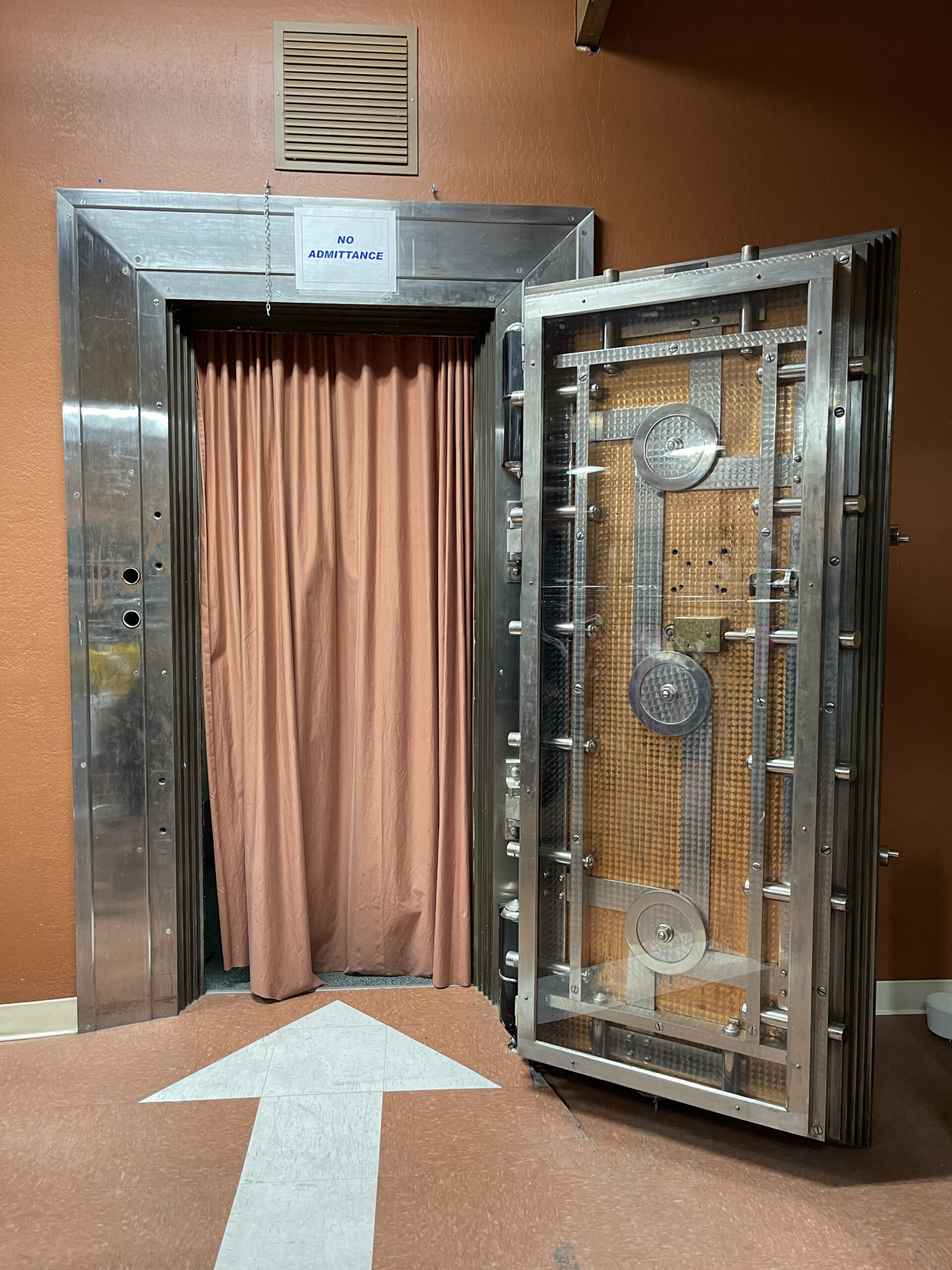
Certificates of deposit can lock in an interest rate for a fixed period. That is useful when savings-account rates may fall, but a traditional CD is less suitable for emergency money because early withdrawals can trigger penalties.
Bankrate reported on October 25, 2026 that competitive one-year CDs were offering up to about 4.10% APY, while the national average one-year CD rate was much lower. Shorter CDs are also available, with terms commonly starting around three months.
A CD ladder reduces the liquidity problem. Instead of putting $12,000 into one CD, for example, you might divide it among several CDs that mature at different dates. Each maturity gives you another opportunity to access cash or reinvest it.
The drawback is still meaningful: an emergency may occur before the next maturity. Early-withdrawal penalties vary by institution and can equal several months of interest. Some banks can even reduce principal if the penalty exceeds the interest already earned, depending on the account terms.
CDs at eligible FDIC-insured banks or federally insured credit unions receive deposit insurance within applicable limits. But always confirm the institution, maturity date, renewal policy, and penalty before depositing emergency savings.
Best for: The least urgently needed portion of a larger emergency reserve when you value a fixed rate more than immediate liquidity.
Hypothetical $20,000 Emergency-Fund Comparison
Here is a simplified example showing why chasing every last fraction of a percentage point may not be worthwhile. Assume a $20,000 balance remains invested for one year and that each quoted annualized rate stays unchanged. Taxes, compounding differences, changing rates, and product-specific fees are excluded.
Simple comparison formula: $20,000 × annual rate = approximate annual interest.
| Option | Illustrative Rate | Approximate One-Year Interest |
|---|---|---|
| High-yield savings | 4.00% | $800 |
| Money market deposit account | 4.00% | $800 |
| 4-week Treasury bills repeatedly renewed at the same rate | 4.012% | About $802 |
| Money market mutual fund | 3.83% | About $766 |
| Competitive one-year CD | 4.10% | About $820 |
The difference between 4.00% and 4.10% on $20,000 is only about $20 over an entire year under this simplified calculation. Locking your complete emergency fund into a CD just to gain roughly $20 would therefore make little sense if an early withdrawal could create a penalty or delay.
Even the difference between 3.83% and 4.10% is only about $54 on $20,000 for one year. Liquidity, fees, insurance, and ease of access can easily be more important than that difference.
This example is hypothetical. Treasury rates must be renewed as bills mature, variable bank rates can change, money market fund yields fluctuate, and taxes can change the after-tax result.
A Tiered Emergency-Fund Approach
You do not necessarily have to choose only one account. A tiered structure can balance accessibility and yield.
For example, someone with a $20,000 emergency fund might keep $8,000 in a high-yield savings account for immediate emergencies, another $6,000 in a money market account or money market fund, and $6,000 in short-term Treasury bills or a CD ladder.
This is not universally optimal. A household with unstable income, high medical costs, or frequent unexpected expenses may prefer keeping nearly everything immediately accessible. Someone with two incomes, substantial available credit, and predictable expenses may be comfortable placing a larger secondary reserve in short-term securities.
Emergency-Fund Checklist
- Confirm that a bank is FDIC-insured or a credit union is federally insured by the NCUA.
- Check whether the advertised APY requires a minimum balance, direct deposit, or promotional code.
- Find out exactly how quickly you can access the money on weekends and holidays.
- Review monthly fees and withdrawal restrictions.
- For CDs, read the early-withdrawal penalty before opening the account.
- For Treasury bills, match maturity dates to money you can reasonably leave untouched.
- For money market mutual funds, remember that they are investments rather than FDIC-insured deposits.
- Recheck yields periodically because savings, money market, and Treasury rates can change.
Frequently Asked Questions
Is 4% a good emergency-fund rate in 2026?
Around 4% is competitive in October 2026, although rates differ by institution and can change. With year-over-year CPI inflation at 3.7% in September, however, a 4% nominal yield represents only a small real gain before taxes.
Should an emergency fund ever be invested in stocks?
Generally, money needed for unpredictable near-term emergencies should not depend on stock-market prices. A market decline could occur at the same time that you need cash.
Are money market accounts and money market funds the same?
No. A money market deposit account is a bank or credit-union deposit product and can receive federal deposit insurance when eligibility requirements are met. A money market mutual fund is an investment product and is not FDIC-insured.
Should I move my entire emergency fund into Treasury bills?
Not necessarily. Treasury bills can be appropriate for a secondary reserve, but cash needed immediately is usually easier to access from a savings or bank money market account.
Conclusion
The best place for an emergency fund is not automatically the account with the highest advertised yield. For most people, a competitive high-yield savings account ranks first because it combines strong interest, federal deposit insurance when held at an eligible institution, simple management, and relatively fast access.
Money market deposit accounts are a close alternative when they provide convenient checks or debit access. Treasury bills and money market mutual funds can work well for secondary reserves, while short-term CD ladders are better suited to money you are reasonably confident you will not need immediately.
The key is to compare the dollar benefit of a higher yield with the actual cost of reduced access. On a $20,000 emergency fund, an extra 0.10 percentage point is worth only about $20 per year before taxes. For money intended to rescue you during an emergency, convenience and reliability can easily be worth more than that.
References
- Federal Deposit Insurance Corporation — Deposit Insurance — Explains FDIC coverage for savings accounts, money market deposit accounts, and CDs, including the standard $250,000 insurance limit.
- National Credit Union Administration — Share Insurance Coverage — Provides federal credit-union deposit insurance limits and ownership-category rules.
- TreasuryDirect — Treasury Bills — Official information on Treasury bill maturities, purchases, taxation, and redemption.
- TreasuryDirect — Selling a Treasury Marketable Security — Explains the process and restrictions involved in selling Treasury securities before maturity.
- Vanguard — Money Market Funds — Provides October 2026 money market fund yields, minimum investments, expenses, and descriptions of fund structure.
- U.S. Bureau of Labor Statistics — Consumer Price Index — Supports the September 2026 inflation figure and provides current U.S. consumer-price data.