Northwestern Mutual’s $1.46 Million Retirement Magic Number: How Much Do You Really Need in 2026?

How much money do you need to retire comfortably? According to Northwestern Mutual’s 2026 Planning & Progress Study, Americans believe the answer is $1.46 million. That is a significant savings goal, especially for households balancing mortgage payments, everyday expenses, debt and family responsibilities. But does everyone really need nearly $1.5 million to retire? Not necessarily. … Read more


Social Security Cuts in 2032: How Much Benefits Could Fall and How Retirees Can Prepare

Social Security is not scheduled to disappear in 2032. But the latest official projections show a serious funding problem that could reduce retirement benefits if Congress does not act. The 2026 Social Security Trustees Report projects that the Old-Age and Survivors Insurance, or OASI, Trust Fund will run out of reserves in the fourth quarter … Read more

2027 Social Security Changes: 3.6% COLA, Higher Benefits and What It Means for Your Budget

Social Security benefits are officially increasing by 3.6% for 2027. For the average retired worker, that works out to about $75 more per month, raising the estimated average monthly retirement benefit from $2,095 before the adjustment to about $2,170 after it. The increase is the largest Social Security cost-of-living adjustment since 2023. SSA 2027 fact … Read more

Social Security Administration 2027 Adjustment: What the Expected Benefit Increase Could Mean for Your Budget

Millions of Americans are already looking ahead to the Social Security Administration’s 2027 cost-of-living adjustment, or COLA. The important number, however, is not official yet. As of September 2026, The Senior Citizens League projects a 3.5% Social Security COLA for 2027. That forecast is higher than the 2.8% adjustment that took effect for 2026. But … Read more

2027 Social Security Benefit Changes: What the COLA Could Mean for Your Monthly Check

Social Security recipients are starting to get a clearer picture of what their benefits could look like in 2027. The most closely watched change is the annual cost-of-living adjustment, or COLA. Current forecasts suggest the 2027 increase could be larger than the 2.8% adjustment beneficiaries received for 2026. As of September 2026, however, the final … Read more

2027 Social Security COLA Estimates: What the Latest Forecast Means for Your Retirement Budget

If you receive Social Security, one number may have a surprisingly large effect on your 2027 household budget: the cost-of-living adjustment, or COLA. Early estimates for the 2027 Social Security COLA are currently landing around 3.7% to 3.8% in several forecasts. That would be noticeably larger than the 2.8% increase applied for 2026. But the … Read more

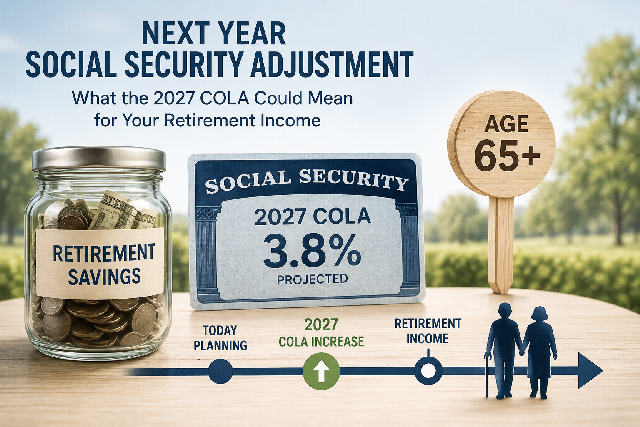
Next Year Social Security Adjustment: What the 2027 COLA Could Mean for Your Retirement Income

The next year Social Security adjustment is attracting attention because early forecasts point to a larger increase in 2027 than beneficiaries received in 2026. One widely followed estimate currently projects a 3.8% cost-of-living adjustment, or COLA. That number is not final. The Social Security Administration will calculate the official adjustment after inflation figures for July, … Read more

Supplemental Security Income: Why There Is No August SSI Payment and What It Means for Your Budget

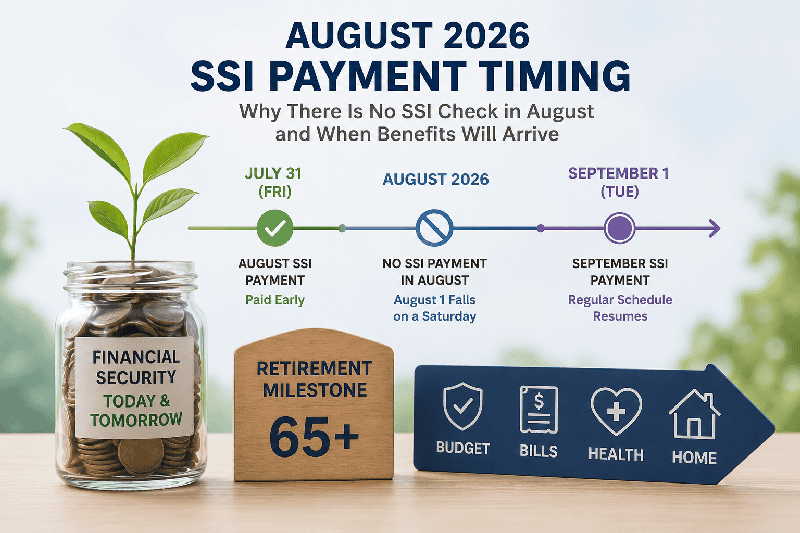
Supplemental Security Income recipients may notice something unusual on the 2026 payment calendar: an SSI payment is scheduled for Friday, July 31, but no SSI payment appears during August. This does not mean the August benefit was canceled. It also does not mean recipients are receiving an extra payment in July. The July 31 deposit … Read more

August 2026 SSI Payment Timing: Why There Is No SSI Check in August and When Benefits Will Arrive

If you receive Supplemental Security Income (SSI), you may notice something unusual in August 2026: there is no SSI payment deposited during the month. This can be alarming if you are expecting your regular monthly benefit. However, in most cases, it does not mean your payment was missed, reduced, or stopped. Instead, it happens because … Read more

EN